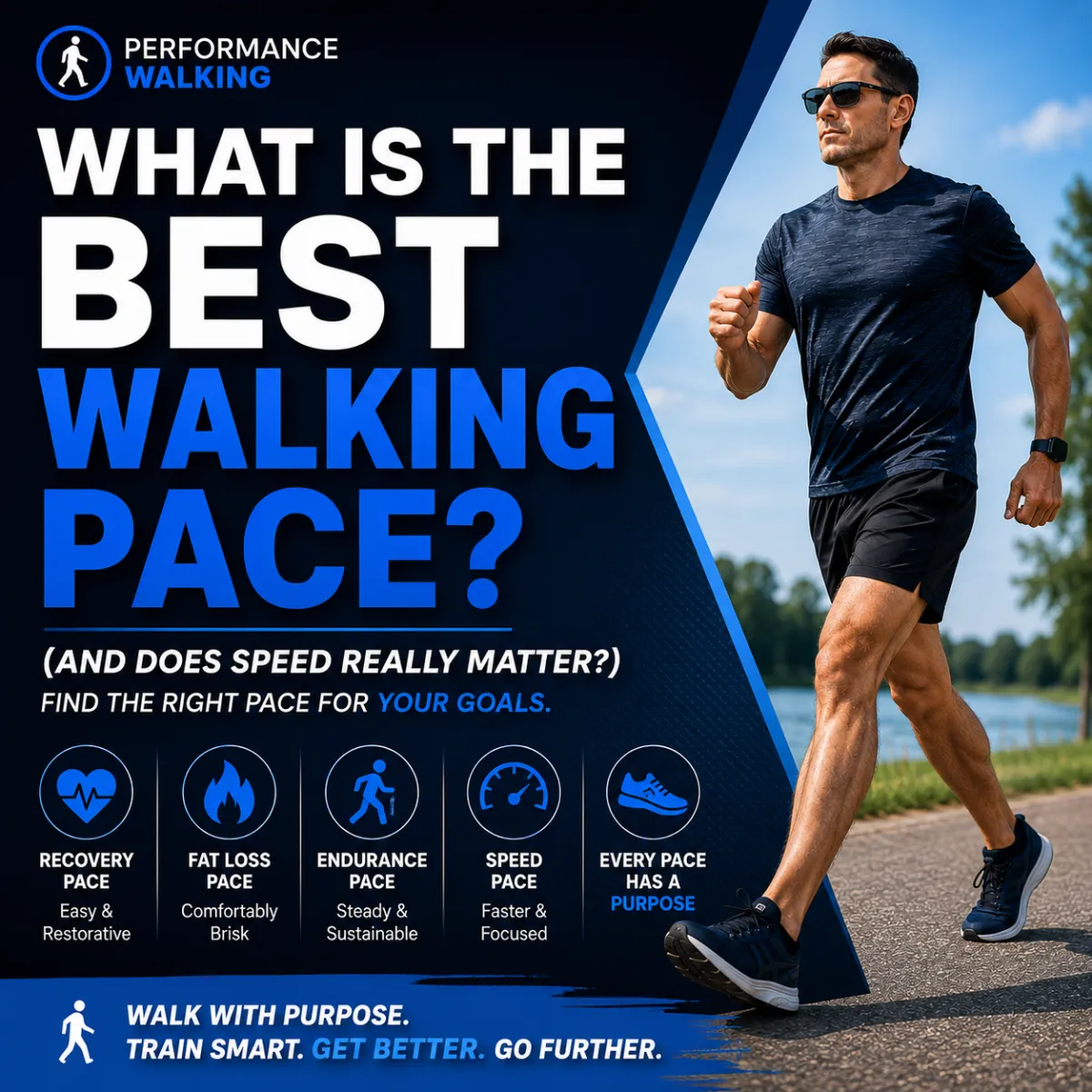
What Is the Best Walking Pace? A Complete Guide to Walking Speed
What Is the Best Walking Pace? (And Does Speed Really Matter?)
Walking is one of the simplest ways to improve your health, but one question comes up more than almost any other:
"How fast should I walk?"
The answer might surprise you.
Many people assume that walking faster is always better. In reality, the best walking pace depends entirely on your goal. The ideal pace for recovery isn't the same as the ideal pace for fat loss, endurance training, or improving your walking speed.
If every walk feels like a race, you're likely working harder than necessary and may even slow your long-term progress.
Instead of asking, "How fast should I walk?" ask yourself:
"What is the purpose of today's walk?"
Once you know your goal, choosing the right pace becomes much easier.
Walking Pace for Recovery
Not every walk should leave you out of breath.
Recovery walks are designed to increase blood flow, reduce stiffness, and help your body recover after harder workouts or long days on your feet. During a recovery walk, you should feel completely comfortable.
You should be able to:
Hold a full conversation without stopping to catch your breath.
Breathe comfortably through your nose most of the time.
Finish the walk feeling refreshed rather than tired.
Recovery walks typically last between 20 and 45 minutes depending on how you're feeling.
These easy sessions help flush waste products from working muscles, improve circulation, and prepare your body for your next quality workout.
Related Reading: Recovery Walks: The Most Underrated Workout for Runners
Walking Pace for Fat Loss
If your goal is losing body fat, faster isn't always better.
One of the biggest mistakes people make is turning every walk into a high-intensity workout. While that may burn more calories during the session, it's often harder to recover from and much more difficult to sustain over time.
Instead, aim for a comfortably brisk pace where:
Your breathing is elevated but controlled.
You can still carry on a conversation.
You feel like you're working, but not struggling.
For most people, this falls into what's commonly called Zone 2 intensity, where your body becomes highly efficient at using fat as fuel while improving your aerobic fitness.
Consistency is far more important than intensity when your goal is long-term weight management.
Related Reading: How Often Should You Walk?
Walking Pace for Endurance
If you're training for a long-distance event or simply want to build lasting endurance, your walking pace should feel sustainable.
This is where many walkers make another mistake.
They believe every training session needs to be fast.
Professional endurance athletes actually spend most of their training at easier intensities because that's where the greatest aerobic adaptations occur.
A good endurance pace should allow you to:
Maintain the effort for 45 to 90 minutes or longer.
Keep your breathing steady.
Finish feeling like you could continue if needed.
Training at this pace improves your heart, lungs, muscles, and overall aerobic capacity without excessive fatigue.
Related Reading: Zone 2 Walking: The Sweet Spot for Endurance
Walking Pace for Speed
There is a time to walk fast.
If your goal is increasing your walking speed, you'll need dedicated speed sessions where your pace is intentionally faster than normal.
During these workouts, focus on:
Quick, controlled steps.
Strong arm drive.
Tall posture.
Powerful push-off.
Efficient foot placement.
Speed workouts are challenging, but they shouldn't make up the majority of your weekly training.
Two focused speed sessions each week are often enough to see significant improvements while allowing adequate recovery.
Related Reading: How to Walk Faster: 8 Proven Techniques to Increase Walking Speed
Walking Pace for Runners
Walking isn't just for walkers.
Many runners use walking as part of their overall training because it helps them recover without adding unnecessary impact.
Walking can be especially valuable for:
Recovery days between hard runs.
Building aerobic fitness.
Returning after injury.
Warm-ups before workouts.
Cool-downs after races.
Adding purposeful walking to a running program often improves consistency while reducing injury risk.
Sometimes walking more actually helps you run better.
Related Reading: Why Every Runner Should Walk More
The Biggest Walking Mistake
The biggest mistake most people make is trying to walk hard every single day.
More effort doesn't always produce better results.
Your body improves during recovery, not just during training.
Think of your weekly walks like a balanced training plan:
Some walks should be easy.
Some should focus on endurance.
Some can be faster.
Recovery walks should remain truly easy.
When every session has a purpose, you'll make far more progress than simply trying to beat yesterday's pace.
How to Find Your Ideal Walking Pace
If you're unsure where to start, use this simple guideline:
Recovery Walk
Very easy effort. Full conversation.
Fitness Walk
Comfortably brisk. Slightly elevated breathing.
Endurance Walk
Steady pace you can maintain for an hour or more.
Speed Session
Purposefully fast with excellent technique.
As your fitness improves, these paces will naturally become faster without feeling harder.
That's one of the clearest signs you're getting fitter.
Final Thoughts
There isn't one perfect walking pace for everyone.
The best pace depends on what you're trying to accomplish that day.
Some walks should help you recover.
Some should build endurance.
Some should improve speed.
Others simply help you stay consistent.
When you stop trying to make every walk as fast as possible and instead match your pace to your goal, you'll recover better, improve faster, and enjoy your walking far more.
The smartest walkers don't walk hard every day.
They walk with purpose.
Continue Reading
If you enjoyed this article, these guides will help you build a smarter walking routine:
Final Thoughts
There isn't one perfect walking pace for everyone.
The best pace depends on what you're trying to accomplish that day.
Some walks should help you recover.
Some should build endurance.
Some should improve speed.
Others simply help you stay consistent.
When you stop trying to make every walk as fast as possible and instead match your pace to your goal, you'll recover better, improve faster, and enjoy your walking far more.
The smartest walkers don't walk hard every day.
They walk with purpose.
Ready to Take Your Walking to the Next Level?
If you're ready to become a stronger, faster, and more efficient walker, we'd love to have you inside the Performance Walking Club.
As a member, you'll get:
Structured walking plans
Monthly walking challenges
Expert coaching and education
Exclusive training resources
A supportive community of walkers working toward the same goals
Whether you're walking for fitness, preparing for your next race, or simply looking to move better for life, the Performance Walking Club gives you the guidance and accountability to keep improving one step at a time.
Join the Performance Walking Club today and start walking with purpose.
