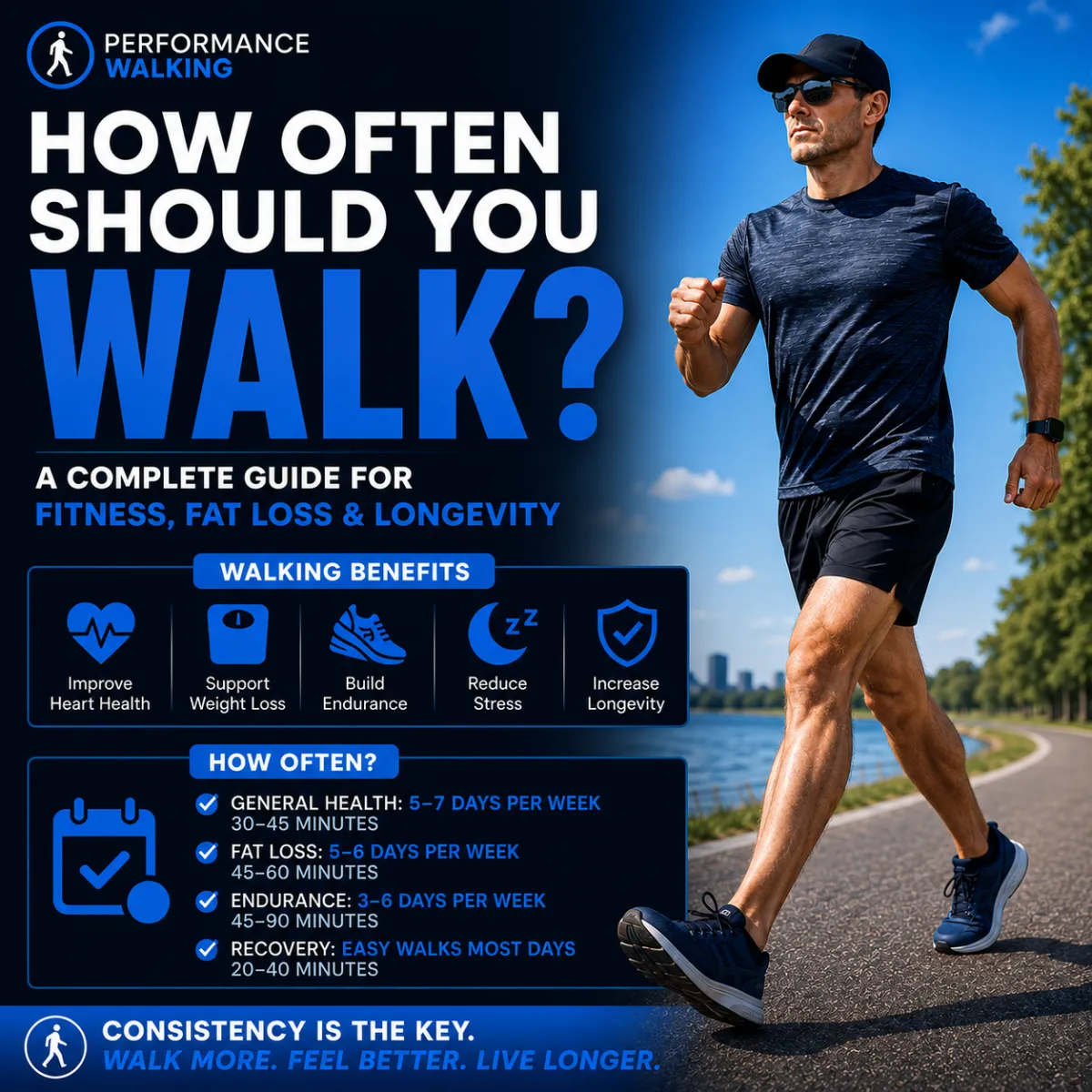
How Often Should You Walk? A Complete Guide for Fitness, Fat Loss & Longevity
How Often Should You Walk? A Complete Guide for Fitness, Fat Loss, and Longevity
One of the most common questions people ask is, "How often should I walk?"
The truth is, there isn't a single answer that works for everyone. The ideal walking schedule depends on your goals. Someone training for a half marathon will walk differently than someone trying to lose weight, recover from an injury, or simply improve their overall health.
The good news is that walking is one of the safest, most effective, and most sustainable forms of exercise available. Unlike high-impact workouts that can leave you sore for days, walking is gentle on your joints while providing impressive benefits for your heart, muscles, metabolism, and mental health.
In this guide, you'll learn how often you should walk based on your goals, how long each walk should be, and how to create a routine you can maintain for years.
Is Walking Every Day Healthy?
For most people, absolutely.
Walking is considered a low-impact activity, meaning it places far less stress on your knees, hips, and ankles than running or many gym workouts. Because of this, many people can safely walk every day without increasing their risk of overtraining.
Daily walking also offers benefits beyond fitness. Regular walks can improve blood sugar control, lower blood pressure, reduce stress, enhance sleep quality, improve mood, and help maintain mobility as you age.
The key isn't to walk hard every day. Instead, vary the intensity of your walks throughout the week so your body has opportunities to recover while continuing to improve.
Walking for General Health
If your goal is simply to improve your overall health, reduce disease risk, and stay active, aim for:
• 5 to 7 walks each week
• 30 to 45 minutes per walk
• A pace where you can comfortably hold a conversation
Remember, consistency is more important than perfection. A 30-minute walk most days of the week is far more valuable than a single two-hour walk once every couple of weeks.
Walking for Fat Loss
Walking is one of the most underrated tools for healthy weight loss.
Unlike extremely intense workouts that can leave you exhausted, walking is sustainable enough to perform regularly. Over time, those consistent sessions create a significant calorie burn while helping you recover better between strength training or higher-intensity exercise.
For fat loss, consider:
• 5 to 6 walking sessions each week
• 45 to 60 minutes per session
• A mix of easy recovery walks and brisk performance walks
Combined with healthy nutrition, walking becomes a powerful long-term strategy for maintaining a healthy body weight.
Walking for Runners
Many runners believe they need to run every day to improve.
In reality, strategic walking can actually make runners stronger.
Performance walking improves aerobic fitness while reducing impact on the joints. Recovery walks increase circulation, reduce muscle stiffness, and help your body bounce back after hard workouts. During periods of injury, walking can also help maintain fitness when running isn't possible.
A simple weekly structure for runners might include:
• Two recovery walks
• One dedicated Zone 2 performance walk
• Easy walks throughout the week for additional movement
If you're interested in this topic, be sure to read our guides on Why Every Runner Should Walk More, Recovery Walks, and Zone 2 Walking.
How Long Should You Walk?
The duration of your walk should match your goal.
Twenty to thirty-minute walks are perfect for recovery, stress relief, and staying active throughout the day.
Forty-five to sixty-minute walks help improve cardiovascular fitness and build endurance.
Longer walks of sixty to ninety minutes are ideal when training for walking events, hiking adventures, or endurance races.
Rather than focusing on hitting an exact number of steps every day, focus on completing purposeful walks that support your overall training plan.
Quality Beats Quantity
Walking isn't simply about moving your feet.
Your posture, arm swing, cadence, stride length, and walking efficiency all influence how much benefit you receive from each session.
Purposeful walking develops better movement patterns, improves endurance, and often helps you walk farther while using less energy.
This is one of the biggest differences between casual walking and performance walking.
A Simple Weekly Walking Plan
Here's an example schedule that works well for many adults:
Monday: Recovery walk
Tuesday: Brisk performance walk
Wednesday: Easy walk
Thursday: Zone 2 endurance walk
Friday: Recovery walk
Saturday: Long endurance walk
Sunday: Relaxed family walk or active recovery
This approach provides enough variety to improve fitness while giving your body time to recover.
Common Walking Mistakes
Many walkers unknowingly slow their progress by making a few common mistakes.
Trying to walk hard every day often leads to unnecessary fatigue. On the other hand, always walking at the same slow pace can limit fitness improvements.
Many people also ignore walking technique, skip recovery days, or fail to follow any structured plan. Small improvements in consistency and technique often produce much bigger results than simply trying to walk longer.
Final Thoughts
Walking isn't just exercise—it's one of the best long-term investments you can make in your health.
Whether your goal is losing weight, improving endurance, recovering from running, or simply feeling stronger every day, walking provides an effective, low-impact solution that almost anyone can maintain.
The most successful walkers aren't the ones who train the hardest. They're the ones who stay consistent, improve their technique over time, and follow a structured plan that keeps them motivated.
If you're ready to take your walking to the next level, join the Performance Walking Club. You'll gain access to structured walking plans, monthly challenges, expert coaching, and a supportive community that will help you walk farther, walk faster, and move better for years to come.
