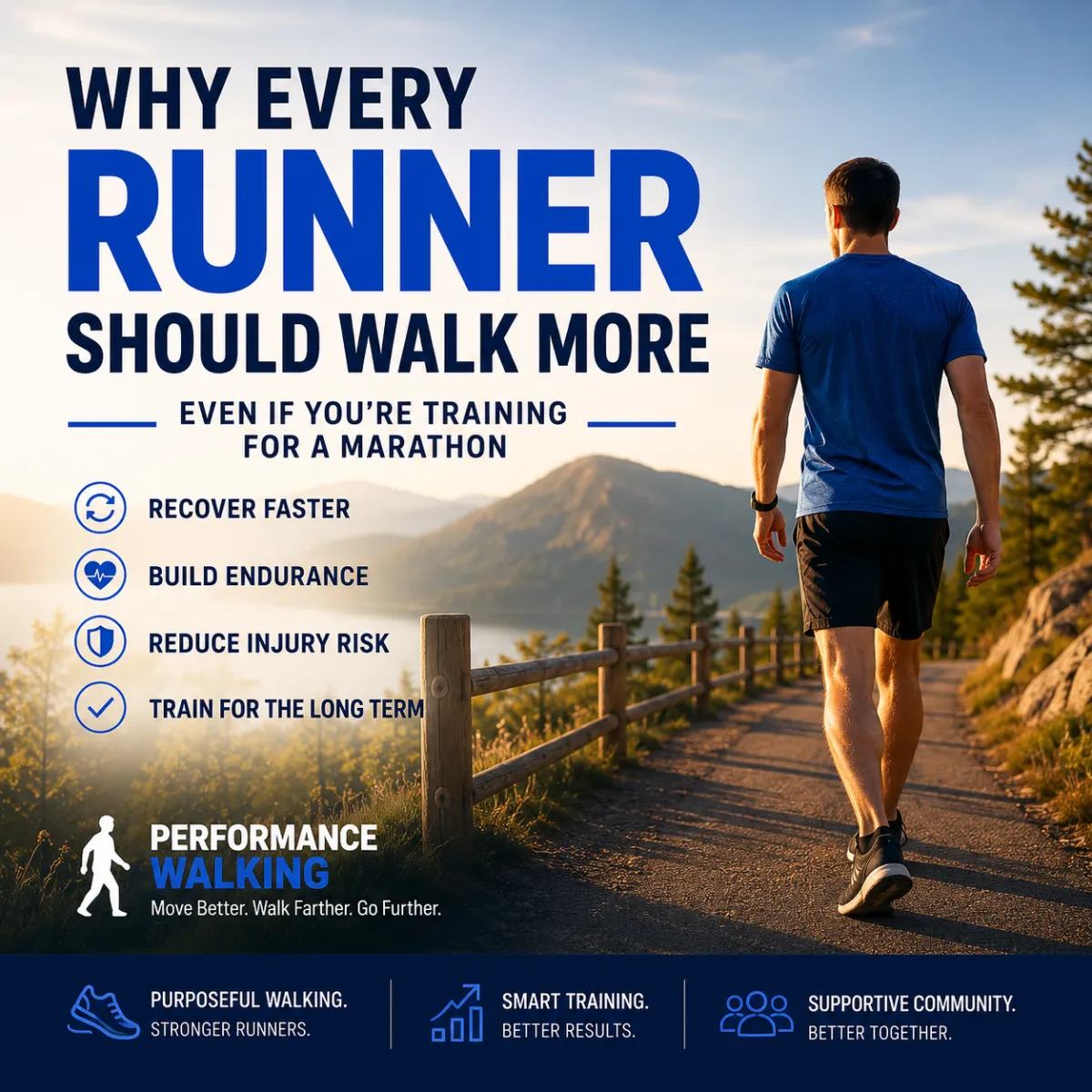
Why Every Runner Should Walk More
Why Every Runner Should Walk More (Even If You're Training for a Marathon)
Category: Walking for Runners
Reading Time: 8–10 minutes
Running Made You Faster. Walking Can Help You Stay Faster.
Most runners believe that getting better means running more.
More miles.
More speed work.
More intensity.
But if you look closely at many successful endurance athletes, you'll notice something surprising.
They walk.
Not because they're injured.
Not because they're out of shape.
Because walking is a powerful training tool.
When used strategically, performance walking can improve recovery, build aerobic fitness, reduce injury risk, and help you stay consistent over the long term.
If you're serious about becoming a stronger runner, it may be time to stop thinking of walking as something you do instead of training and start thinking of it as part of your training.
Why Walking Has a Bad Reputation
Walking has often been viewed as something beginners do.
For experienced runners, it can feel too easy to make a difference.
The reality is very different.
Performance walking isn't simply taking a casual stroll around the neighborhood.
It's purposeful movement with specific training goals.
Just as every run has a purpose, every walk can have one too.
Five Reasons Every Runner Should Walk
1. Walking Speeds Up Recovery
Running places significant stress on your muscles, joints, tendons, and nervous system.
Recovery walks increase circulation without creating additional fatigue.
That increased blood flow helps deliver oxygen and nutrients while supporting your body's natural recovery process.
Many runners discover they feel better after a 30-minute walk than they do after sitting on the couch all day.
2. Walking Builds Your Aerobic Base
One of the biggest misconceptions in endurance training is that every aerobic session needs to be a run.
Walking can keep your heart working in an aerobic zone while greatly reducing impact on the body.
Over time, these lower-stress sessions contribute to improved endurance without constantly adding more running volume.
3. Walking Reduces Injury Risk
Many running injuries occur because the body never fully recovers between hard sessions.
Performance walking allows you to continue training while reducing the repetitive impact associated with running.
It can become an excellent option during recovery weeks, after races, or when small aches and pains begin to appear.
4. Walking Improves Consistency
.The best training plan is the one you can follow consistently.
Some days your body simply isn't ready for another hard run.
Walking allows you to maintain momentum while respecting your recovery.
Consistency over months matters far more than one extra workout
5. Walking Helps You Train for the Long Term
Most runners aren't just training for one race.
They're training for years of healthy movement.
Performance walking helps manage overall training stress, allowing many athletes to stay active longer while continuing to improve.
What Is Performance Walking?
Performance walking isn't casual walking.
It has intention.
A performance walk may include:
• Specific pace targets
• Heart rate zones
• Recovery goals
• Endurance development
• Technique practice
Every walk serves a purpose.
That's what separates performance walking from simply going for a walk.
When Should Runners Walk?
Consider adding performance walks:
The day after a long run
During recovery weeks
Following speed sessions
While returning from injury
On days when fatigue is high
As an additional aerobic session without more impact
Walking Is Training
The goal isn't to replace running.
The goal is to become a stronger, healthier, and more resilient runner.
Performance walking fills an important gap that many training plans overlook.
It allows you to build fitness while giving your body the opportunity to recover.
For many runners, walking isn't taking a step backward.
It's one of the smartest steps forward they can take.
Join the Performance Walking Club
Want structured walking plans designed to improve endurance, recovery, and long-term performance?
Inside the Performance Walking Club you'll gain access to:
Structured Training Plans
Monthly Walking Challenges
Expert Coaching
A Supportive Member Community
Practical Resources to help you walk farther, recover better, and perform at your best.
